
Messinia Thoughout the Course of History
Somewhere between myth and history, in the Bronze era, circa 1,900 BC, it is believed that the Indo-European races settled in the southern Helladic peninsula; these peoples are considered to be the first Greeks. The peak of this civilization, known as the Mycenaean civilization, is placed circa 1,600–1,200 BC.
As the texts of the ancient Greeks and Latin writers tell us, the first residents of the region were descendants of Lelegas, King of Laconia, and the Caucones from Eleusis. Polykaon, son of Lelegas, and his wife, Messene, brought an army from Argos and settled in the region, which takes its name from this first queen. Their dynasty lasted for five generations.
The Aeolians later descended with Perieres, who married Gorgophone, daughter of Perseus. They had two sons, Aphareus and Leucippus. The first was the founder of Arene. Aphareus, at the order of Poseidon, gave up the part of his kingdom that faced the sea to Neleus, who arrived as an exile from Iolcos.
Neleus was based in Pylos and, as Aphareus had no heirs, when Nestor, the son of Neleus, rose to the throne he inherited the kingdom of Aphareus. Nestor’s realm extended north to the River Alpheios, and south-east almost to Taygetos. He reigned in Ancient Phares (today’s Kalamata) and, after returning from the ten-year war in Troy, died in old age. Two generations later, the Dorians invaded his kingdom.
Mycenaean findings discovered in the region—and those brought to light by excavations—bear witness to the extent, power, and might of this civilization in Messenia, which is proven to have been the most densely populated region of the Peloponnesus. In at least 50 locations (Volimidia Chora, Koryfasio, Malthi, Rizomylos, Vigla, Harokopio, Thouria, Ano Eglianos, Tragana, Myrsinochori, and Papoulia among them), tholos and rock-cut tombs, ruins of buildings, rich ceramics, and other grave offerings testify to the economic vigour and social development of the Mycenaean world here.
There is no longer any doubt that the Palace of Pylos in Ano Eglianos is the kingdom of Nestor. Fair, wise, eloquent, tireless, and war-experienced, Nestor is the figure who speaks to the Achaeans and reconciles them in disputes before the walls of Troy—an enduring example of gentleness and prudence across the Greek world.
The end of the Mycenaean civilization finally came about owing to a wider unrest and upheaval across the Helladic world toward the end of the second millennium BC.
Somewhere between myth and history, in the Bronze era, circa 1,900 BC, it is believed that the Indo-European races settled in the southern Helladic peninsula; these peoples are considered to be the first Greeks. The peak of this civilization, known as the Mycenaean civilization, is placed circa 1,600–1,200 BC.
As the texts of the ancient Greeks and Latin writers tell us, the first residents of the region were descendants of Lelegas, King of Laconia, and the Caucones from Eleusis. Polykaon, son of Lelegas, and his wife, Messene, brought an army from Argos and settled in the region, which takes its name from this first queen. Their dynasty lasted for five generations.
The Aeolians later descended with Perieres, who married Gorgophone, daughter of Perseus. They had two sons, Aphareus and Leucippus. The first was the founder of Arene. Aphareus, at the order of Poseidon, gave up the part of his kingdom that faced the sea to Neleus, who arrived as an exile from Iolcos.
Neleus was based in Pylos and, as Aphareus had no heirs, when Nestor, the son of Neleus, rose to the throne he inherited the kingdom of Aphareus. Nestor’s realm extended north to the River Alpheios, and south-east almost to Taygetos. He reigned in Ancient Phares (today’s Kalamata) and, after returning from the ten-year war in Troy, died in old age. Two generations later, the Dorians invaded his kingdom.
Mycenaean findings discovered in the region—and those brought to light by excavations—bear witness to the extent, power, and might of this civilization in Messenia, which is proven to have been the most densely populated region of the Peloponnesus. In at least 50 locations (Volimidia Chora, Koryfasio, Malthi, Rizomylos, Vigla, Harokopio, Thouria, Ano Eglianos, Tragana, Myrsinochori, and Papoulia among them), tholos and rock-cut tombs, ruins of buildings, rich ceramics, and other grave offerings testify to the economic vigour and social development of the Mycenaean world here.
There is no longer any doubt that the Palace of Pylos in Ano Eglianos is the kingdom of Nestor. Fair, wise, eloquent, tireless, and war-experienced, Nestor is the figure who speaks to the Achaeans and reconciles them in disputes before the walls of Troy—an enduring example of gentleness and prudence across the Greek world.
The end of the Mycenaean civilization finally came about owing to a wider unrest and upheaval across the Helladic world toward the end of the second millennium BC.
After the death of Epaminondas, Sparta attempted once more to occupy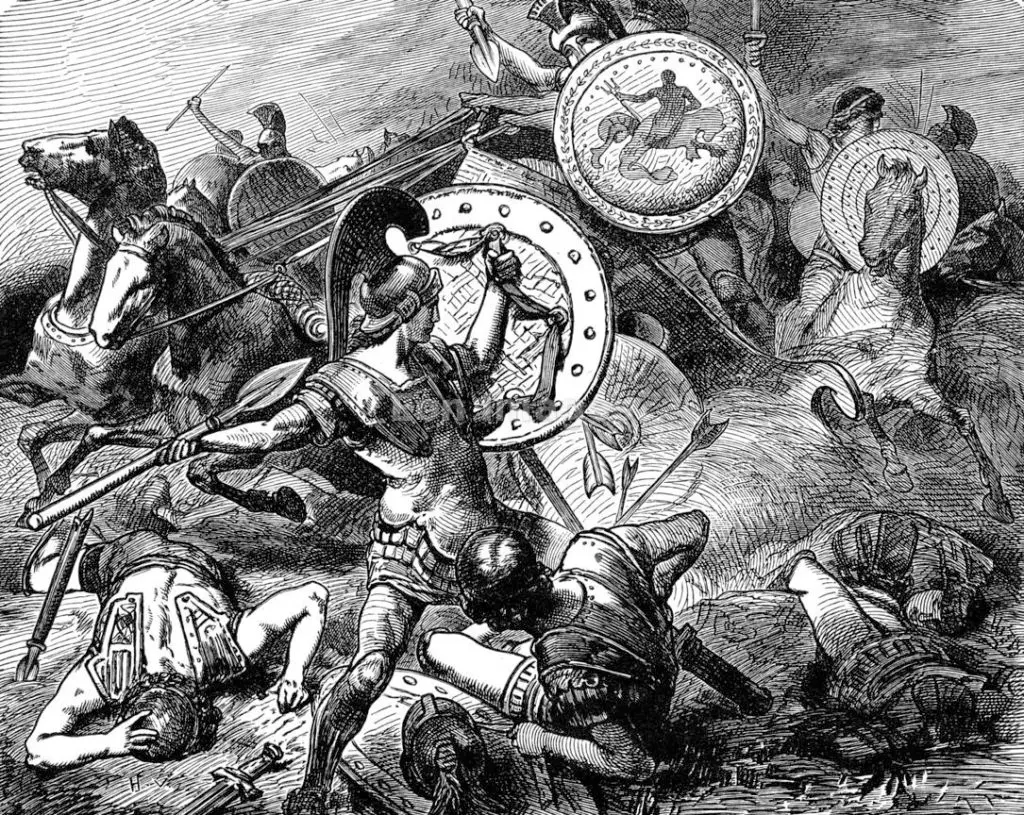 Messene. Athenians, Arcadians, and Argives supported the Messenians, and Sparta was eventually forced to acknowledge their freedom.
Before Roman rule, Messenia was destroyed twice: in 214 BC by Pharus, general of Philip V, and in 202 BC by the Spartan tyrant Nabis. In 191 BC, Messenia joined the Achaean League along with the cities of the Peloponnesus. Rome ultimately conquered the region and much of Greece in 146 BC.
From the fourth to the ninth century AD, raids by Vandals, Goths, Avarians, Slavs, and Arabs reshaped settlement patterns. Coastal communities gradually formed and grew into important cities over later centuries: Kalamata, Koroni, Methoni, Navarino, and Arcadia (ancient Kyparissia).
For much of the early Christian era, silence covers many monuments—churches and monasteries scattered across Messenia. Mount Taygetus, then known as Pentadaktylos, again served as both boundary and point of contention. In around 970 AD, Nikon “the Metanoeite” from Pontus travelled across the region, spreading his worship, and southern Peloponnesus gained one of its major saints.
The fourth Crusade fractured the Byzantine world. Geoffrey of Villehardouin conquered Morea and founded the Principality of Achaea. He held Arcadia and Kalamata as his base, ceded Stenyklarus to Baron Luke, and Nicholas II of Saint Omer ruled the Pylos region, founding Paliokastro in 1278 as a fortified lookout. William of Villehardouin—born in Kalamata—built castles, promoted commerce, and minted coin, but political strife followed, and after his death Frankish power began to unravel.
Meanwhile the Venetians held Koroni, Methoni, and Navarino. When the Franks finally withdrew two centuries later, Byzantines—through the Despotate of Mystras—again controlled much of the Peloponnesus.
A succession of conquerors followed: Franks, Venetians, Navarians, and Genoese. By the mid-14th century the Ottoman Turks began their gradual conquest, completed by the end of the 15th century. Methoni fell heroically in 1500, and many inhabitants were massacred. After their defeat at Lepanto (1571), the Ottomans built Niokastro (1573) at Pylos as a new base.
Venetians under Morosini retook Koroni after a long siege, aided by Maniates, Messenians, and Heptanesians (1685). The Venetians withdrew from the Peloponnesus in 1714; as always, the population bore the brunt through loss of life and plunder.
In the 18th century, new economic structures emerged and helped form a rising middle class. Industry and commerce organized around key towns—Arcadia, Methoni, Pylos, Koroni, Nissi, Androusa, and Kalamata—and local products travelled abroad. Epidemics, however, also struck. The Orlov Revolt (1770), encouraged by Russian policy, failed, and Messenians suffered terrible massacres at the hands of Albanian forces.
On 21 March 1821, thousands marched on Kalamata, led by Papaflessas, Kolokotronis, Nikitaras, and Petrobeis Mavromichalis. On 23 March 1821, a Doxology was sung at Agioi Apostoloi in Kalamata and revolutionaries swore to the cause. The uprising spread: Niokastro fell to Greek hands in 1821, held until Ibrahim’s campaign brought devastation in 1825.
In 1824–1827, Muhammad Ali of Egypt sent Ibrahim to crush the revolution. Despite resistance in Maniaki and battles at Verga and Almyros, Ibrahim ravaged the Peloponnesus, destroying orchards and massacring populations. Niokastro and Sfaktiria endured brutal fighting and slaughter.
International diplomacy shifted the outcome. The Convention of London (6 July 1827) set the terms for Greek independence. When Ottoman forces did not comply, Allied fleets entered Navarino Bay on 20 October 1827. The battle that followed destroyed much of the Turkish-Egyptian fleet. Ibrahim raised a white flag at Niokastro the next day.
“The Turk was demolished the colossus by the Bull
Greece is free and with an ode of joy
For Navarino sings Byron from the grave”
— Victor Hugo, “Navarin”, Les Orientales (1827)
After independence, Messenia followed the broader course of the Greek state. Kalamata grew into a significant shipping and export hub in the 19th century, exporting raisins and developing steam-powered factories and silk mills. By the 1930s it ranked among the country’s major ports for imports. On 28 April 1941, German troops occupied the city.